Fitted Wardrobes vs IKEA: What Actually Makes the Difference?
Choosing a wardrobe often comes down to two approaches: a modular system such as those offered by IKEA, or a fitted wardrobe manufactured specifically for your space. Both solutions provide storage, but they differ significantly in how they use space, what materials they use, and how they perform over time.
For many homeowners and developers, the key question is not simply price—it is long-term value, durability, and how efficiently the wardrobe integrates into the room.
Standardisation vs Custom Precision
Modular wardrobes are designed around fixed dimensions. This standardisation allows large-scale production and easy installation, but it also means the furniture must adapt to the room. In many cases, this results in gaps above the wardrobe, unused corners, or filler panels on the sides.
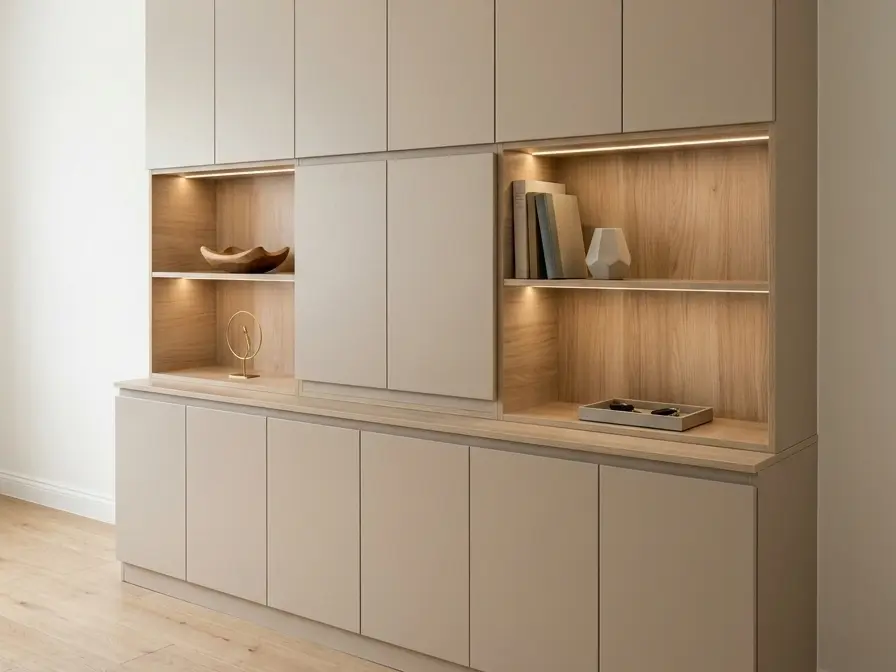
Fitted wardrobes take the opposite approach. At ISTO Furniture, wardrobes are manufactured using CNC-based production based on the design of actual dimensions of the room. This allows the wardrobe to extend floor-to-ceiling and wall-to-wall, eliminating unused spaces and creating a seamless architectural appearance.
The practical outcome is simple: more usable storage and a cleaner interior design.
Materials and Construction Quality
Material quality plays a critical role in the longevity of furniture. While modular wardrobes are designed to balance performance and affordability, fitted wardrobes can be engineered with higher-grade materials and more robust construction methods.
ISTO Furniture uses engineered wood panels designed for structural durability, including moisture-resistant boards suitable for demanding environments. Precision CNC machining ensures tight tolerances, while ABS edge banding improves resistance to impact and wear.
The result is furniture that remains stable and visually consistent even after years of daily use.
Comparison: Modular vs Fitted Wardrobes
| Feature | Modular Wardrobes (e.g. IKEA) | ISTO Furniture Wardrobes |
| Dimensions | Standard module sizes | Custom-built to exact room dimensions |
| Space usage | Gaps above or beside units are common | Full floor-to-ceiling, wall-to-wall integration |
| Materials | Particle board / standard panels | High-density engineered boards |
| Manufacturing | Mass-produced | CNC precision custom manufacturing |
| Design flexibility | Limited to catalog options | Fully customizable layouts and finishes |
| Visual integration | Furniture placed in the room | Furniture becomes part of the architecture |
Storage Efficiency
Storage capacity is not just about volume—it is about how effectively the space is used.
Modular wardrobes follow fixed module widths, which often leave unusable spaces. In contrast, fitted wardrobes are designed around both room constraints and user habits. Hanging sections, drawers, and shelving can be configured to maximise efficiency.
This is especially valuable in smaller homes or irregular spaces, where every centimetre matters.
| Storage Aspect | Modular Systems | ISTO Furniture Wardrobes |
| Custom hanging heights | Limited | Fully adjustable |
| Corner utilisation | Often inefficient | Optimised |
| Ceiling height usage | Usually leaves gaps | Fully utilised |
| Internal layout | Predefined modules | Designed around user experience and needs |
Cost: A Common Misconception
Many people assume fitted wardrobes are dramatically more expensive than modular solutions. In reality, the difference is often smaller than expected.
Because ISTO Furniture manufactures wardrobes directly using industrial production methods, custom solutions can be delivered efficiently and at competitive pricing.
| Cost Factor | Modular Wardrobes | ISTO Furniture |
| Initial price | Lower entry cost | At times higher depending on design and fittings |
| Storage efficiency | Moderate | Higher usable volume |
| Product lifespan | Moderate | Long-term durability |
| Value over time | May require replacement | Built for long-term use |
In many cases, once installation adjustments and additional filler components are considered, custom wardrobes are not significantly more expensive than modular systems.
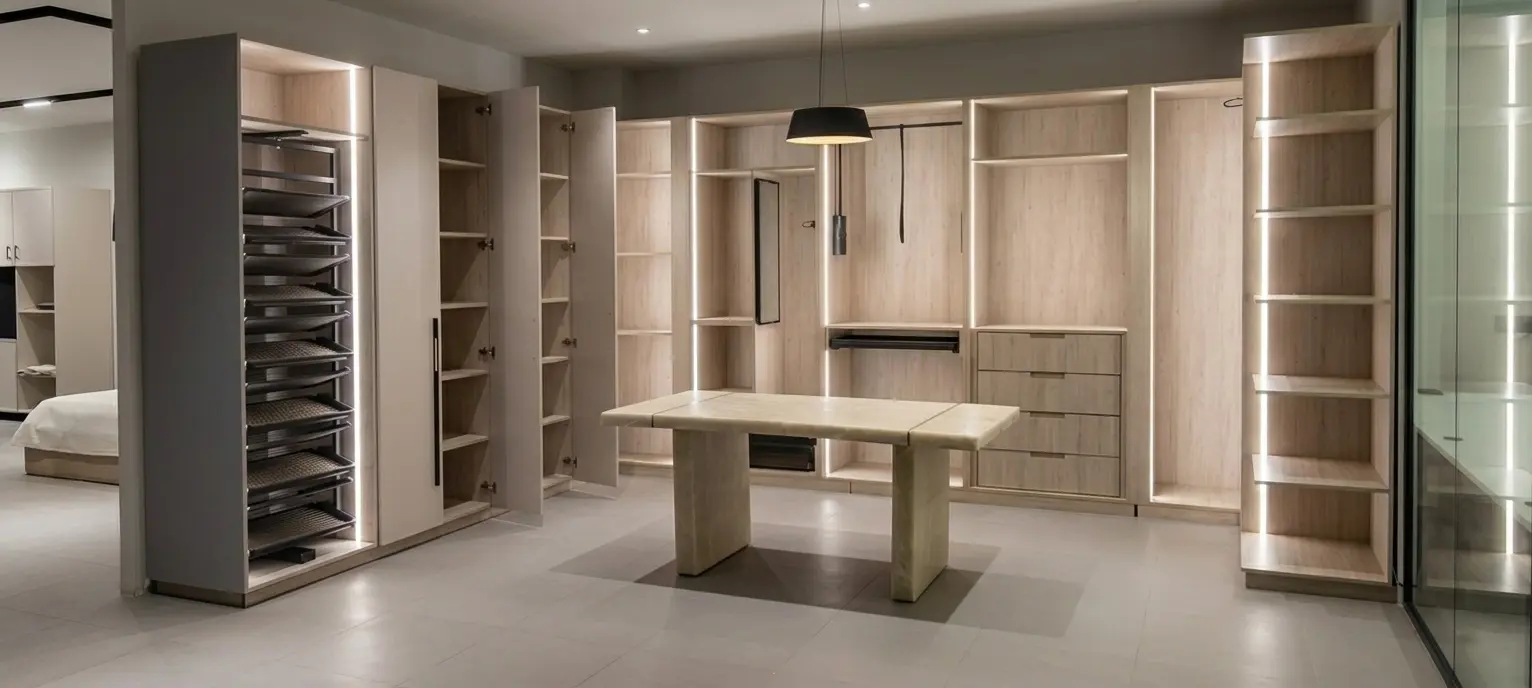
Discover wardrobes on display in our experience center.
After-Sales Service and Long-Term Support
Furniture is not just a purchase—it is a long-term part of the home.
Retail systems typically provide standard warranties, but after installation support can be limited to replacement parts or self-service adjustments.
ISTO Furniture provides direct after-sales support, including:
- Assistance with adjustments after installation
- Replacement components if needed
- Maintenance guidance for long-term durability
- Support for future modifications or extensions
Because the furniture is manufactured by ISTO Furniture itself, clients deal directly with the manufacturer rather than navigating multiple retail channels.

Which Option Should You Choose?
Both solutions serve different needs.
| Best Choice If… | Recommended Option |
| You need a quick, budget-friendly solution | Modular retail wardrobe |
| Your room fits wardrobe dimensions | Modular retail wardrobe |
| You want maximum storage efficiency | Fitted wardrobe |
| You want seamless interior design | Fitted wardrobe |
| You prioritize durability and long-term value | Fitted wardrobe |
Conclusion
The difference between modular wardrobes and fitted wardrobes is ultimately a question of standardisation versus engineering.
Modular wardrobes are designed to work reasonably well in many homes. Fitted wardrobes are designed to work perfectly in one.
With modern CNC manufacturing and efficient production processes, custom wardrobes from ISTO Furniture offer precision, durability, and competitive pricing—without the large price gap many people expect.
For spaces where design, efficiency, and longevity matter, fitted wardrobes provide a clear advantage.